
Blog
VR in USA Logistics: Streamlining Warehouse Management with 3D Interfaces
UX Design
8 min read

Introduction
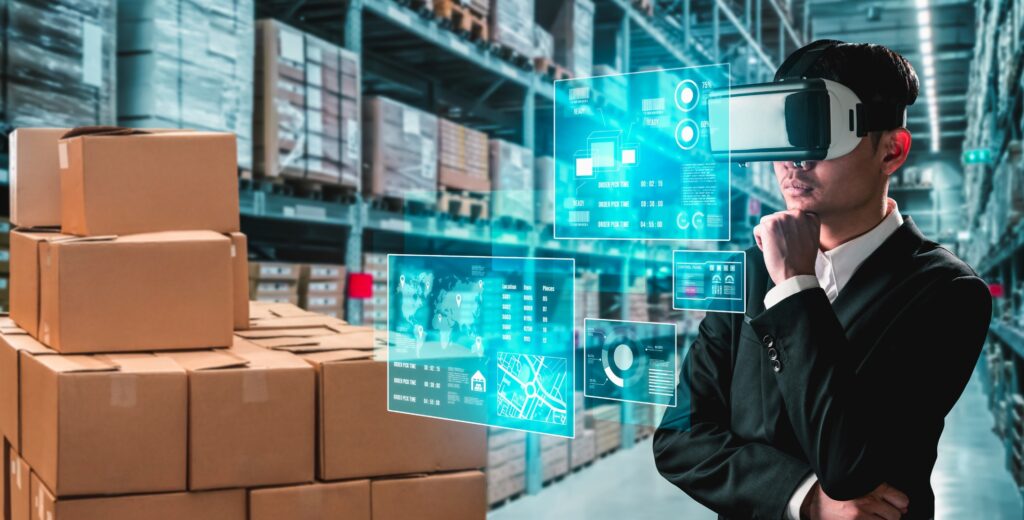
Virtual Reality (VR) isn’t just for gaming or futuristic sci-fi movies anymore—it’s making a big splash in industries like logistics, especially in how warehouses are managed. Let’s face it, in today’s fast-paced world, running a warehouse is no small feat. From managing tight schedules to minimizing costs, and ensuring safety, there’s a lot to juggle. VR has stepped up to help solve some of these problems, and what makes it so cool is how it uses immersive 3D interfaces to make everything smoother, more efficient, and even safer. Let’s take a deeper dive into how VR is reshaping warehouse operations in the USA logistics scene and why it’s starting to be a game-changer.
- Introduction: The Emerging Role of VR in Logistics
Running a warehouse isn’t easy—there are so many moving parts to consider. From maximizing space and making sure inventory is accurate to ensuring employees are safe and trained, the challenges are constant. Traditional methods, like pen and paper or static computer systems, are often slow and can cause bottlenecks, especially when dealing with massive, busy warehouses. This is where VR comes into play, offering a solution that many never thought possible. Instead of relying on outdated systems or trial-and-error processes, VR lets warehouse managers and workers “step into” a virtual world, giving them a way to visualize, plan, and execute strategies with incredible precision.
In the USA, where time is money, companies are starting to see the real potential of VR. It’s not just about cutting-edge tech—it’s about making smarter, quicker decisions that can lead to tangible improvements in operations. And the best part? VR doesn’t just simulate environments; it allows for hands-on experiences, letting workers engage with their tasks in a way that traditional methods can’t replicate.
- Step 1: Creating Optimized Warehouse Designs with 3D VR Modeling
When it comes to designing a warehouse, efficiency is everything. However, getting it right isn’t always easy. It’s one thing to draw up a layout on paper, but it’s another thing entirely to see how it functions in real life, especially when mistakes can be costly. VR changes all that by allowing managers to build and modify 3D models of the warehouse without having to lift a single box.
Picture this: You’re managing a massive warehouse and you’re considering shifting aisles, shelving, or adding more space for inventory. With VR, you can walk through the space virtually, experiment with different layouts, and immediately see how those changes would impact efficiency. Gone are the days of making costly adjustments after a design has been built.
Real-World Example:
Walmart, one of the largest retailers in the USA, has been using VR to design and optimize its distribution centers. By running simulations of different warehouse layouts, they’re able to tweak and improve their designs in the virtual world before committing to real-world changes. This means that they can improve their workflow, maximize space, and ultimately speed up the delivery process—all without the risk of wasting resources or time.
Expert Insight:
“When you’re working with something as complex as a warehouse, having a virtual space where you can experiment and get real-time feedback is invaluable. You can test different designs and make informed decisions based on what’s actually going to work—without the costly trial and error.”
- Step 2: Accelerating Employee Training with VR Simulations
Training new employees in a warehouse can be a tough and time-consuming process. Whether they’re learning to operate machinery, manage inventory, or follow safety protocols, the standard methods of hands-on training come with their own set of challenges—especially when it comes to ensuring consistency. VR takes training to the next level by providing a risk-free environment where employees can practice as much as they need without the pressure of making a mistake.
Imagine being a new employee at a warehouse. In the past, you’d shadow experienced workers or spend hours trying to get the hang of different systems. With VR, you can step into a virtual warehouse and operate forklifts, organize inventory, and even deal with emergency situations, all while receiving instant feedback on your performance. It’s a safe, stress-free way to get up to speed faster.
Real-World Example:
The United States Postal Service (USPS) has embraced VR for training its workers. With VR simulations, USPS employees can practice sorting packages, navigating warehouse layouts, and even operating sorting equipment without stepping foot inside an actual warehouse. The result? Faster, more efficient training without the risks associated with hands-on learning.
Expert Insight:
“Training in VR is a game-changer. Not only does it help employees get more comfortable with the equipment and systems faster, but it also boosts retention rates. People tend to remember more when they can actively engage with the content in a way that feels real.”
- Step 3: Improving Inventory Management with Real-Time VR Visualization
When managing inventory, accuracy is everything. A misplaced item or a missed count can throw off the entire operation. Traditional methods of tracking inventory—like checking stock manually or using spreadsheets—are prone to errors and can be time-consuming. VR makes inventory management faster and more accurate by providing a 3D visualization of the entire warehouse. Warehouse managers can walk through the virtual space and see where everything is located, helping them quickly spot problems or inefficiencies.
Not only can you visualize the layout, but VR also integrates seamlessly with inventory management software, making real-time updates as easy as clicking a button. This gives employees the tools they need to make quick, informed decisions without needing to leave the virtual space.
Real-World Example:
Samsung has been using VR to improve its warehouse management systems. With VR, employees can visualize stock levels and track inventory more accurately, cutting down on time spent searching for products and reducing errors. The system has also helped speed up order fulfillment, ensuring customers get their products quickly and without hiccups.
Expert Insight:
“When you’re dealing with thousands of items in a large warehouse, keeping track of everything can feel like an impossible task. VR helps simplify that by providing a visual representation of inventory and allowing workers to access real-time data, making it easier to manage and reducing errors.”
- Step 4: Enhancing Safety Protocols and Reducing Workplace Hazards
Safety in warehouses is a huge concern. There are forklifts zooming around, heavy lifting equipment, and potential hazards like spills or fires that could happen at any moment. Traditional safety training, while essential, often lacks the hands-on practice that would truly prepare employees for emergencies. VR solves this by simulating real-world accidents, such as equipment malfunctions or fire outbreaks, so employees can practice how to respond without ever putting anyone in danger.
This kind of training helps employees build confidence and learn how to act quickly in high-pressure situations. The best part? It’s all in a controlled, virtual environment that allows for endless repetitions, meaning employees are more likely to retain the information and act instinctively in the real world.
Real-World Example:
Amazon has integrated VR into its safety training programs, allowing warehouse employees to experience emergency situations in a virtual environment. By simulating accidents, employees can practice how to react to fires, equipment malfunctions, or other hazards. This hands-on experience helps Amazon’s workforce respond confidently and effectively in real-world emergencies, significantly reducing workplace injuries.
Expert Insight:
“By training employees in a VR environment, we give them the opportunity to practice without any real-world consequences. The more familiar employees are with the safety protocols, the better they’ll perform when faced with a real emergency.”
- Step 5: Boosting Operational Efficiency with Workflow Optimization in VR
Efficiency is key when it comes to warehouse operations. Small inefficiencies, like delays in the movement of goods or poor warehouse layout, can add up quickly, driving up costs and slowing down operations. VR allows managers to simulate different workflows and test how goods move through a warehouse in real-time. By running these virtual simulations, managers can identify potential bottlenecks and experiment with changes to improve productivity.
One of the best things about VR is that it lets you test multiple scenarios without ever disrupting actual operations. Whether it’s adjusting shelving, changing sorting methods, or redesigning workflows, you can see how everything plays out in the virtual world first. This way, managers can make data-driven decisions that translate into real-world improvements.
Real-World Example:
Coca-Cola has been using VR to streamline its warehouse operations. By testing different processes and warehouse layouts in a virtual environment, Coca-Cola has been able to cut costs and improve product flow. The ability to run simulations means that the company can identify improvements before making any physical changes, saving time and money in the long run.
Expert Insight:
“VR allows warehouse managers to get ahead of problems before they even happen. Testing different configurations and workflows virtually helps avoid costly mistakes, saving both time and money. The beauty of VR is that it gives you the ability to experiment without the risk.” - Step 6: Empowering Data-Driven Decisions with VR Analytics
VR doesn’t just give you a simulation—it also gathers valuable data that can be used to improve performance. As warehouses become more data-driven, the ability to collect and analyze information from VR simulations offers even more insight into what’s working and what isn’t. Managers can track everything from employee performance to material handling speeds, helping them make more informed decisions that improve operational efficiency.
With VR analytics, managers don’t just react to issues—they can anticipate them. By analyzing past trends and data, they can predict what might go wrong and take proactive steps to prevent it. The result? Fewer surprises and more streamlined operations.
Real-World Example:
Prologis, a major logistics real estate company, uses VR analytics to optimize warehouse operations. The data from VR simulations helps them assess warehouse layouts, inventory systems, and workforce management, allowing them to make smarter decisions and improve efficiency for their clients.
Expert Insight:
“VR analytics take things to the next level by turning simulations into actionable insights. By analyzing data from these virtual environments, warehouse managers can make proactive changes that improve both short-term efficiency and long-term performance.”
Conclusion: The Future of VR in Warehouse Management
The future of warehouse management is looking increasingly virtual. As VR continues to evolve, its potential to streamline operations, enhance safety, and improve training will only grow.
With VR,warehouse managers in the USA are gaining the ability to test, train, and analyze in ways that were once unimaginable. It’s all about making smarter decisions, faster, and improving efficiency across the board.
The great thing about VR is that it’s not just for big players—small and medium-sized warehouses are jumping on the bandwagon, too, realizing the potential for cost savings, better-trained employees, and smoother operations. As VR technology continues to improve, we can only imagine the new and exciting ways it will shape the future of warehouse management. The road ahead looks virtual, and it’s brimming with possibilities.